Launching Rapyd Cloud

A new platform to make dynamic web hosting scalable & affordable.

Role

Principle Product Designer

Team

Product Manager

2 Tech Leads

5 Engineers

1 QA

Technology

Laravel (Back-end)

React (Web App)

Material UI (Component Library)

Duration

~ 9 months

Project overview

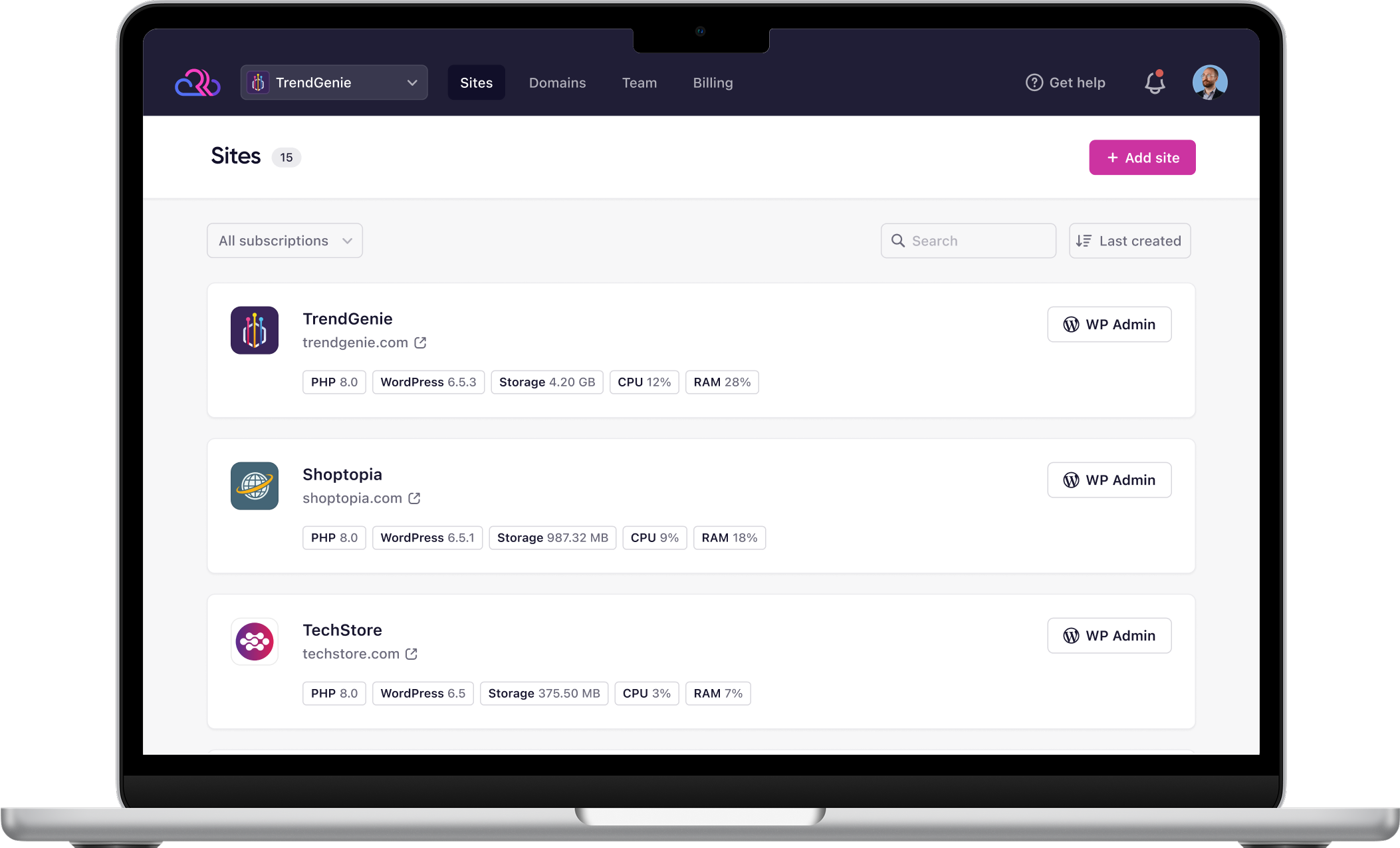
Rapyd Cloud was built to deliver fast, scalable hosting for interactive WordPress sites such as eLearning, e-commerce, and social communities.

Background

Rapyd Cloud started as an internal tool to power a cloud platform for BuddyBoss, another product in the founders’ portfolio. But when it consistently outperformed mainstream hosts, they made a pivotal decision — to rebrand and relaunch the platform as a standalone offering providing hosting to a broader audience.

With over a year already invested in development, it was a race to deliver something meaningful and start generating a return on that investment.

The original UX/UI

The problem

We were tackling a specific and growing challenge: WordPress was being pushed beyond its traditional use with more and more sites implementing dynamic experiences relying on heavy user engagement.

These sites demand high interactivity, with each user generating many server requests. Existing hosts struggled to maintain performance under these conditions, as they were optimized for high traffic — not real-time user activity. To stay online, site owners were investing in costly infrastructure and third-party performance tools, with little flexibility to scale on demand.

We keep upgrading, but the site still crashes when too many users log in at the same time.

BuddyBoss customer, via CX ticket

The only way to keep our online store stable is by turning off the features that drive conversions.

Store owner, via social post

Project Goals

Design a seamless hosting UX

The platform had to be simple on the surface, powerful underneath.

Build fast, but flexible

We had to be ready for iterations and potential white-labelling.

Launch in under 9 months

The product needed to start delivering ROI before year-end.

Story Development

I used a story-driven method to frame the product experience, shape it, and get it ready to bring to life through design.

Audience

Rapyd Cloud wasn’t for technical users, but creators, educators, and sellers with interactive WordPress sites. I interviewed potential customers to identify their real-world needs: fast, reliable hosting that’s easy to set up and affordable to scale.

User persona

Character

We designed Rapyd Cloud to play the part of the reliable sidekick; powerful, stable, and helpful. I shaped the value proposition around delivering a capable but calm experience, which would provide users a hosting platform built around business value.

Value proposition canvas

Narrative

To define the right product story, I started by mapping the customer journey from first contact to long-term use and advocacy. This exercise revealed where the value of Rapyd Cloud really needed to show up — and where users were most at risk of dropping off.

It helped us focus the product experience around key moments: setting up a site, understanding performance, and feeling in control. Rather than designing features in isolation, we shaped the flow around the emotional arc of gaining confidence, speed, and stability.

Customer journey map

Core Experience

Three principles would guide the design of the product experience:

Talk business, not technology

Avoid technical jargon by using clear, actionable language — anyone should be able to set up a site.

Help always at hand

Meet problems with guidance, not dead ends. Always nudge users towards a solution or next step.

No-nonsense billing

Plans, usage and upcoming charges must be transparent and easy for users to understand at a glance.

Design system

A design system was essential to achieving the speed, consistency, and scalability the product demanded.

Foundations

I inherited an unfinished dashboard UI that needed to be rebranded for Rapyd Cloud and restructured for long-term scalability. While built using Material UI (MUI), the implementation was fragmented and inconsistent — components were styled ad hoc, making the overall experience feel unpolished.

By wrapping MUI in a custom design system, I was able to eliminate inconsistencies and over-engineered patterns. This made room for a clean, unified dashboard experience using Rapyd Cloud’s new identity.

Design Tokens

I designed a flexible token system that adapted styles across brands, color modes, and screen sizes. Integrated into MUI’s theme provider, the tokens kept the UI consistent, scalable, and easy to evolve.

UI Components

I created a set of components based on common patterns like buttons, forms, and tables. Built on MUI, they brought consistency to the UI and made it easier for development to move quickly.

Feature Workflow

01

Ideate

Each feature started with low-fidelity wireframes or rough designs to explore direction before refining the details.

02

Align

I then shared concepts with the team to gather feedback and align before moving into high-fidelity design.

03

Design

With direction confirmed, I delivered developer-ready designs showing full flows and key interaction details.

04

Develop

Engineers built the feature using the design system, guided by clear specs and ongoing collaboration.

05

Validate

We tested features internally and with trusted early users to surface issues and assess real-world usability.

06

Iterate

Feedback shaped the next round of updates, refining the feature ahead of the product launch.

Developer handoff

A seamless handoff relied on more than visuals; it required developing a shared understanding between myself and the engineers.

I collaborated closely with engineers to map technical complexity into user-friendly flows. The design system streamlined this process: tokens and components made visual intent clear, allowing me to focus documentation on logic, behavior, and interaction. This made implementation smoother and helped reduce ambiguity during build.

Example UX flow

Final Designs

Results

We delivered on all three project goals — on time, with a strong foundation and positive early momentum.

Design a seamless hosting UX

  • Strong early feedback from customers during beta and shortly after launch.
  • Trustpilot reviews highlighted the dashboard’s clarity and ease of use, especially for non-technical users.
  • 8 out of 10 users satisfied with the dashboard experience, based on a CSAT survey presented 3 weeks after sign up.

Build fast, but flexible

  • Design system delivered in 6 weeks, providing a shared foundation for fast execution.
  • 40% faster design-to-dev turnaround, thanks to flexible tokens, reusable components, and clear handoff.

Launch in under 9 months

  • Completed core dashboard features and rebrand within 3 months, keeping the project ahead of schedule.
  • Beta launched at 6 months, with early access spots quickly filled due to strong demand.
  • Full launch at 9 months, generating a return on investment before year-end as planned.

18 Months Later

Promoted to Head of Product Design

10% MRR Growth in Year 1

<5% Churn Rate Since Launch

1000+ Sites Hosted

4.9★ Trustpilot Rating

4.8★ G2 Rating

Launching Rapyd Cloud

A new platform to make dynamic web hosting scalable & affordable.
Role

Principle Product Designer

Team

Product Manager

2 Tech Leads

5 Engineers

1 QA

Technology

Laravel (Back-end)

React (Web App)

Material UI (Component Library)

Duration

~ 9 months

Project overview

Rapyd Cloud was built to deliver fast, scalable hosting for interactive WordPress sites such as eLearning, e-commerce, and social communities.

Background

Rapyd Cloud started as an internal tool to power a cloud platform for BuddyBoss, another product in the founders’ portfolio. But when it consistently outperformed mainstream hosts, they made a pivotal decision — to rebrand and relaunch the platform as a standalone offering providing hosting to a broader audience.

With over a year already invested in development, it was a race to deliver something meaningful and start generating a return on that investment.
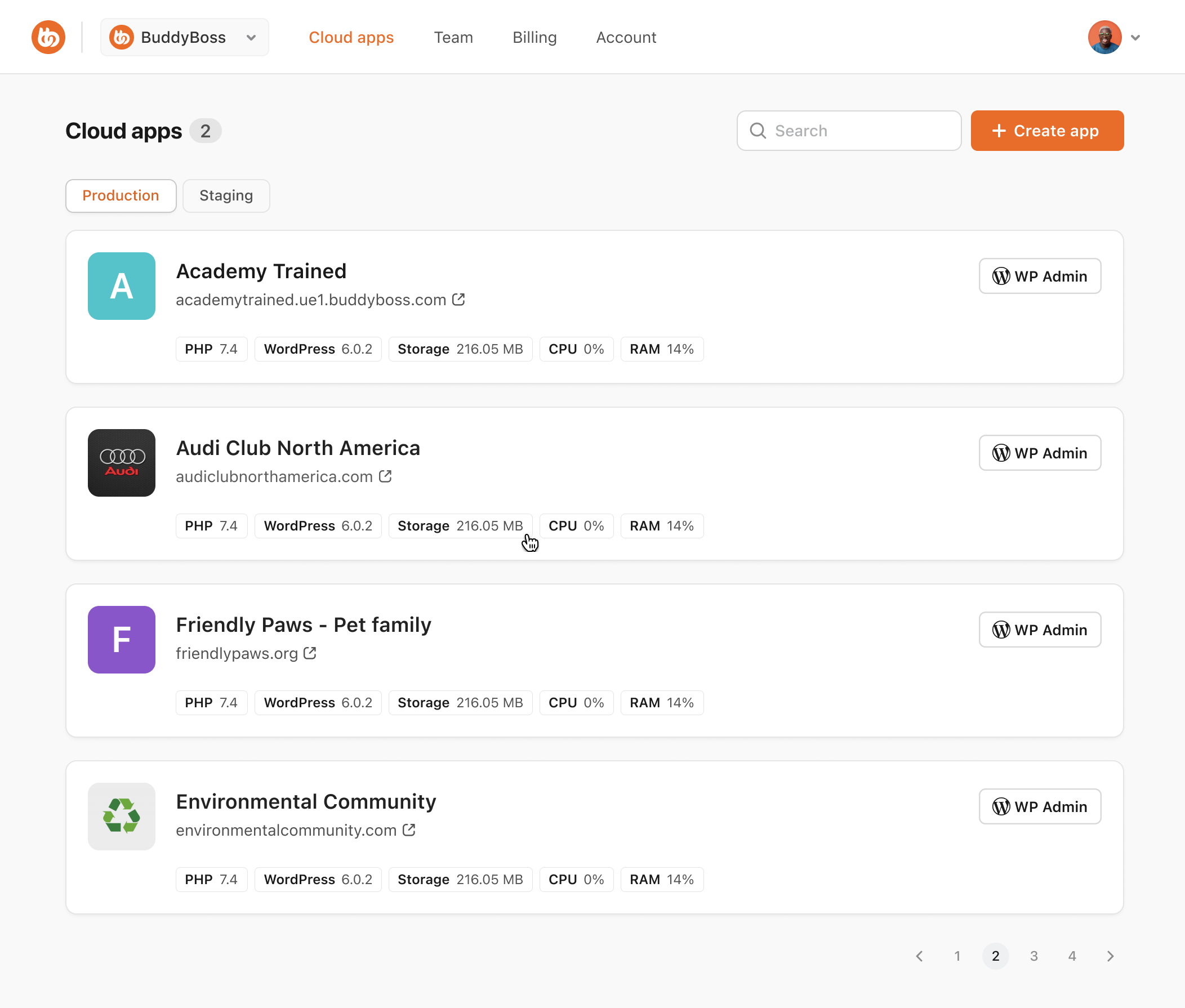
The original UX/UI

The problem

We were tackling a specific and growing challenge: WordPress was being pushed beyond its traditional use with more and more sites implementing dynamic experiences relying on heavy user engagement.

These sites demand high interactivity, with each user generating many server requests. Existing hosts struggled to maintain performance under these conditions, as they were optimized for high traffic — not real-time user activity. To stay online, site owners were investing in costly infrastructure and third-party performance tools, with little flexibility to scale on demand.

We keep upgrading, but the site still crashes when too many users log in at the same time.

BuddyBoss customer, via CX ticket

The only way to keep our online store stable is by turning off the features that drive conversions.

Store owner, via social post

Project Goals

Design a seamless hosting UX

The platform had to be simple on the surface, powerful underneath.

Build fast, but flexible

We had to be ready for iterations and potential white-labelling.

Launch in under 9 months

The product needed to start delivering ROI before year-end.

Story Development

I used a story-driven method to frame the product experience, shape it, and get it ready to bring to life through design.

Audience

Rapyd Cloud wasn’t for technical users, but creators, educators, and sellers with interactive WordPress sites. I interviewed potential customers to identify their real-world needs: fast, reliable hosting that’s easy to set up and affordable to scale.

User persona

Character

We designed Rapyd Cloud to play the part of the reliable sidekick; powerful, stable, and helpful. I shaped the value proposition around delivering a capable but calm experience, which would provide users a hosting platform built around business value.

Value proposition canvas

Narrative

To define the right product story, I started by mapping the customer journey from first contact to long-term use and advocacy. This exercise revealed where the value of Rapyd Cloud really needed to show up — and where users were most at risk of dropping off.

It helped us focus the product experience around key moments: setting up a site, understanding performance, and feeling in control. Rather than designing features in isolation, we shaped the flow around the emotional arc of gaining confidence, speed, and stability.

Customer journey map

Core Experience

Three principles would guide the design of the product experience:

Talk business, not technology

Avoid technical jargon by using clear, actionable language — anyone should be able to set up a site.

Help always at hand

Meet problems with guidance, not dead ends. Always nudge users towards a solution or next step.

No-nonsense billing

Plans, usage and upcoming charges must be transparent and easy for users to understand at a glance.

Design system

A design system was essential to achieving the speed, consistency, and scalability the product demanded.

Foundations

I inherited an unfinished dashboard UI that needed to be rebranded for Rapyd Cloud and restructured for long-term scalability. While built using Material UI (MUI), the implementation was fragmented and inconsistent — components were styled ad hoc, making the overall experience feel unpolished.

By wrapping MUI in a custom design system, I was able to eliminate inconsistencies and over-engineered patterns. This made room for a clean, unified dashboard experience using Rapyd Cloud’s new identity.

Design Tokens

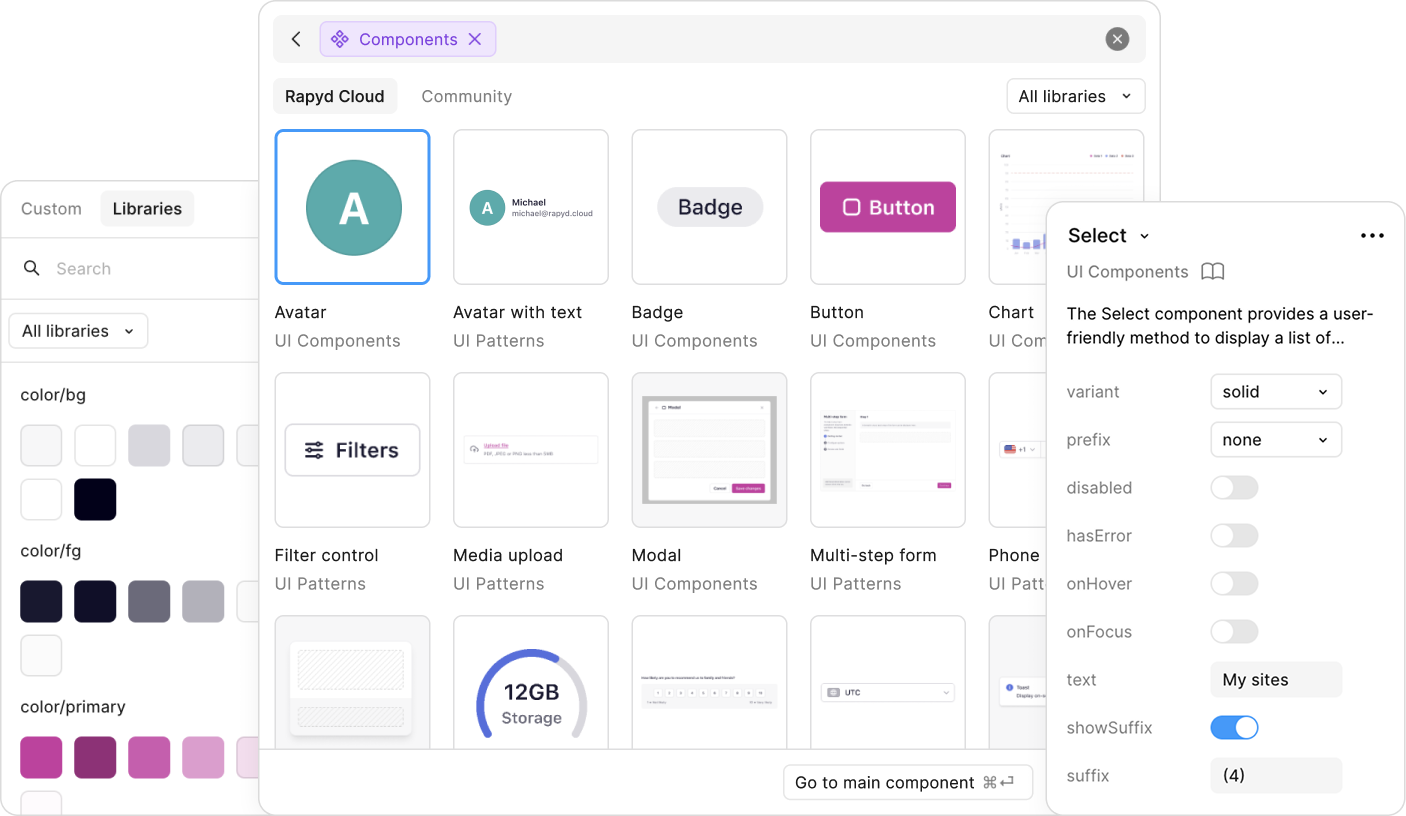
I designed a flexible token system that adapted styles across brands, color modes, and screen sizes. Integrated into MUI’s theme provider, the tokens kept the UI consistent, scalable, and easy to evolve.

UI Components

I created a set of components based on common patterns like buttons, forms, and tables. Built on MUI, they brought consistency to the UI and made it easier for development to move quickly.
Feature Workflow

01

Ideate

Each feature started with low-fidelity wireframes or rough designs to explore direction before refining the details.

02

Align

I then shared concepts with the team to gather feedback and align before moving into high-fidelity design.

03

Design

With direction confirmed, I delivered developer-ready designs showing full flows and key interaction details.

04

Develop

Engineers built the feature using the design system, guided by clear specs and ongoing collaboration.

05

Validate

We tested features internally and with trusted early users to surface issues and assess real-world usability.

06

Iterate

Feedback shaped the next round of updates, refining the feature ahead of the product launch.

Developer handoff

A seamless handoff relied on more than visuals; it required developing a shared understanding between myself and the engineers.

I collaborated closely with engineers to map technical complexity into user-friendly flows. The design system streamlined this process: tokens and components made visual intent clear, allowing me to focus documentation on logic, behavior, and interaction. This made implementation smoother and helped reduce ambiguity during build.

Example UX flow

Final Designs

Results

We delivered on all three project goals — on time, with a strong foundation and positive early momentum.

Design a seamless hosting UX

  • Strong early feedback from customers during beta and shortly after launch.
  • Trustpilot reviews highlighted the dashboard’s clarity and ease of use, especially for non-technical users.
  • 8 out of 10 users satisfied with the dashboard experience, based on a CSAT survey presented 3 weeks after sign up.

Build fast, but flexible

  • Design system delivered in 6 weeks, providing a shared foundation for fast execution.
  • 40% faster design-to-dev turnaround, thanks to flexible tokens, reusable components, and clear handoff.

Launch in under 9 months

  • Completed core dashboard features and rebrand within 3 months, keeping the project ahead of schedule.
  • Beta launched at 6 months, with early access spots quickly filled due to strong demand.
  • Full launch at 9 months, generating a return on investment before year-end as planned.

18 Months Later

Promoted to Head of Product Design

10% MRR Growth in Year 1

<5% Churn Rate Since Launch

1000+ Sites Hosted

4.9★ Trustpilot Rating

4.8★ G2 Rating

Launching Rapyd Cloud

A new platform to make dynamic web hosting scalable & affordable.

Role

Principle Product Designer

Team

Product Manager

2 Tech Leads

5 Engineers

1 QA

Technology

Laravel (Back-end)

React (Web App)

Material UI (Component Library)

Duration

~ 9 months

Project overview

Rapyd Cloud was built to deliver fast, scalable hosting for interactive WordPress sites such as eLearning, e-commerce, and social communities.

Background

Rapyd Cloud started as an internal tool to power a cloud platform for BuddyBoss, another product in the founders’ portfolio. But when it consistently outperformed mainstream hosts, they made a pivotal decision — to rebrand and relaunch the platform as a standalone offering providing hosting to a broader audience.

With over a year already invested in development, it was a race to deliver something meaningful and start generating a return on that investment.

The original UX/UI

The problem

We were tackling a specific and growing challenge: WordPress was being pushed beyond its traditional use with more and more sites implementing dynamic experiences relying on heavy user engagement.

These sites demand high interactivity, with each user generating many server requests. Existing hosts struggled to maintain performance under these conditions, as they were optimized for high traffic — not real-time user activity. To stay online, site owners were investing in costly infrastructure and third-party performance tools, with little flexibility to scale on demand.

We keep upgrading, but the site still crashes when too many users log in at the same time.

BuddyBoss customer, via CX ticket

The only way to keep our online store stable is by turning off the features that drive conversions.

Store owner, via social post

Project Goals

Design a seamless hosting UX

The platform had to be simple on the surface, powerful underneath.

Build fast, but flexible

We had to be ready for iterations and potential white-labelling.

Launch in under 9 months

The product needed to start delivering ROI before year-end.

Story Development

I used a story-driven method to frame the product experience, shape it, and get it ready to bring to life through design.

Audience

Rapyd Cloud wasn’t for technical users, but creators, educators, and sellers with interactive WordPress sites. I interviewed potential customers to identify their real-world needs: fast, reliable hosting that’s easy to set up and affordable to scale.

User persona

Character

We designed Rapyd Cloud to play the part of the reliable sidekick; powerful, stable, and helpful. I shaped the value proposition around delivering a capable but calm experience, which would provide users a hosting platform built around business value.

Value proposition canvas

Narrative

To define the right product story, I started by mapping the customer journey from first contact to long-term use and advocacy. This exercise revealed where the value of Rapyd Cloud really needed to show up — and where users were most at risk of dropping off.

It helped us focus the product experience around key moments: setting up a site, understanding performance, and feeling in control. Rather than designing features in isolation, we shaped the flow around the emotional arc of gaining confidence, speed, and stability.

Customer journey map

Core Experience

Three principles would guide the design of the product experience:

Talk business, not technology

Avoid technical jargon by using clear, actionable language — anyone should be able to set up a site.

Help always at hand

Meet problems with guidance, not dead ends. Always nudge users towards a solution or next step.

No-nonsense billing

Plans, usage and upcoming charges must be transparent and easy for users to understand at a glance.

Design system

A design system was essential to achieving the speed, consistency, and scalability the product demanded.

Foundations

I inherited an unfinished dashboard UI that needed to be rebranded for Rapyd Cloud and restructured for long-term scalability. While built using Material UI (MUI), the implementation was fragmented and inconsistent — components were styled ad hoc, making the overall experience feel unpolished.

By wrapping MUI in a custom design system, I was able to eliminate inconsistencies and over-engineered patterns. This made room for a clean, unified dashboard experience using Rapyd Cloud’s new identity.

Design Tokens

I designed a flexible token system that adapted styles across brands, color modes, and screen sizes. Integrated into MUI’s theme provider, the tokens kept the UI consistent, scalable, and easy to evolve.

UI Components

I created a set of components based on common patterns like buttons, forms, and tables. Built on MUI, they brought consistency to the UI and made it easier for development to move quickly.

Feature Workflow

01

Ideate

Each feature started with low-fidelity wireframes or rough designs to explore direction before refining the details.

02

Align

I then shared concepts with the team to gather feedback and align before moving into high-fidelity design.

03

Design

With direction confirmed, I delivered developer-ready designs showing full flows and key interaction details.

04

Develop

Engineers built the feature using the design system, guided by clear specs and ongoing collaboration.

05

Validate

We tested features internally and with trusted early users to surface issues and assess real-world usability.

06

Iterate

Feedback shaped the next round of updates, refining the feature ahead of the product launch.

Developer handoff

A seamless handoff relied on more than visuals; it required developing a shared understanding between myself and the engineers.

I collaborated closely with engineers to map technical complexity into user-friendly flows. The design system streamlined this process: tokens and components made visual intent clear, allowing me to focus documentation on logic, behavior, and interaction. This made implementation smoother and helped reduce ambiguity during build.

Example UX flow

Final Designs

Results

We delivered on all three project goals — on time, with a strong foundation and positive early momentum.

Design a seamless hosting UX

  • Strong early feedback from customers during beta and shortly after launch.
  • Trustpilot reviews highlighted the dashboard’s clarity and ease of use, especially for non-technical users.
  • 8 out of 10 users satisfied with the dashboard experience, based on a CSAT survey presented 3 weeks after sign up.

Build fast, but flexible

  • Design system delivered in 6 weeks, providing a shared foundation for fast execution.
  • 40% faster design-to-dev turnaround, thanks to flexible tokens, reusable components, and clear handoff.

Launch in under 9 months

  • Completed core dashboard features and rebrand within 3 months, keeping the project ahead of schedule.
  • Beta launched at 6 months, with early access spots quickly filled due to strong demand.
  • Full launch at 9 months, generating a return on investment before year-end as planned.

18 Months Later

Promoted to Head of Product Design

10% MRR Growth in Year 1

<5% Churn Rate Since Launch

1000+ Sites Hosted

4.9★ Trustpilot Rating

4.8★ G2 Rating